Cancer Surgery
Advanced surgical oncology services in Bilaspur — performed by experienced surgeons in a modern operation theatre. Led by Dr. Pushkal Dwivedi — Medical Oncologist & Hemato-Oncologist.
Book Appointment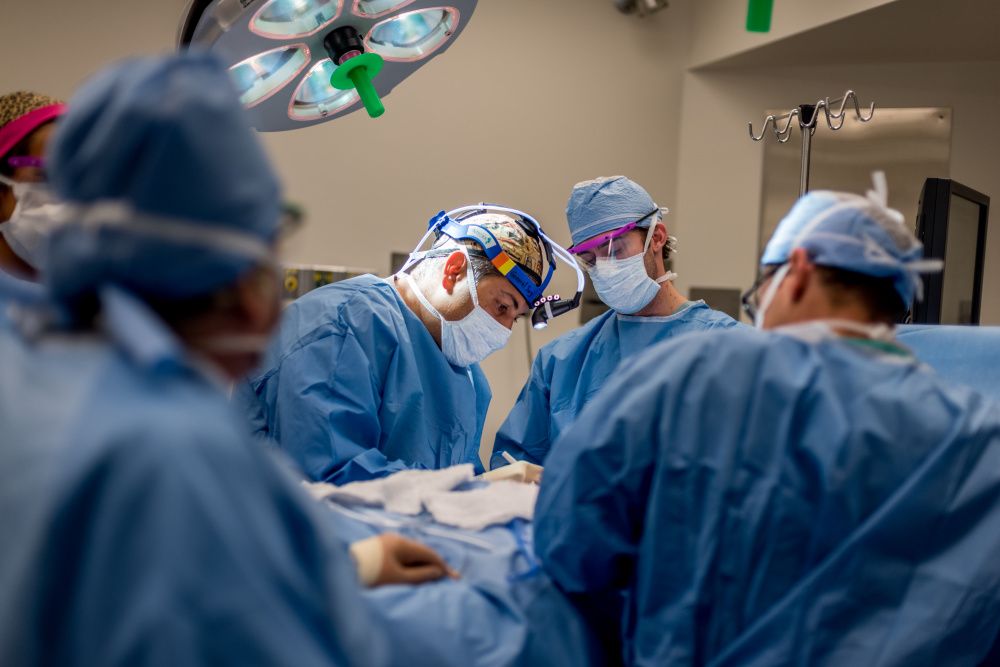
What is Cancer Surgery?
Cancer surgery (also called surgical oncology) involves removing tumours, affected tissues, and sometimes nearby lymph nodes. It is one of the oldest and most effective treatments for many solid cancers — especially when the cancer is localised.
Surgery can be curative (to remove cancer completely), diagnostic (to obtain tissue for testing), debulking (to reduce tumour size), or palliative (to relieve symptoms).
Surgical oncology services are delivered in a modern operation theatre, with a multidisciplinary approach that combines surgery with other treatments when needed.
Curative
Removes cancerDiagnostic
Tissue for testingPalliative
Relieves symptomsDebulking
Reduces tumour sizeTypes of Cancer Surgery
Different surgical approaches for cancer treatment
Open Surgery
Traditional surgery with a larger incision to access the tumour.
Laparoscopic Surgery
Minimally invasive — uses small incisions & a camera.
Robotic Surgery
Precision surgery using robotic-assisted systems (where available).
Wide Local Excision
Removal of tumour with a margin of healthy tissue.
Lymph Node Dissection
Removal of nearby lymph nodes for staging or treatment.
Reconstructive Surgery
Restores appearance or function after major surgery.
Surgical Approach
Every cancer surgery is planned carefully by a multidisciplinary team — considering the type and stage of cancer, the patient's overall health, and treatment goals.
- Accurate diagnosis & staging before surgery
- Multidisciplinary treatment planning
- Modern operation theatre with safety protocols
- Post-operative care & rehabilitation
- Coordination with chemo / radiation if needed
- Long-term follow-up & monitoring
Frequently Asked Questions
Common questions about cancer surgery
Need Surgical Oncology Consultation?
Book an appointment with Dr. Pushkal Dwivedi for a personalised treatment plan.
Book AppointmentMedical Oncologist & Hemato-Oncologist. Feel free to talk with us.